

Apple Varieties

The Apples We Grow
These are among the 39 varieties of heirloom and other apples you’ll find at Hidden Gem Orchard
Ashmead’s Kernel Autumn Crisp Baldwin Calville Blanc Chisel Jersey Cordera Cortland Cox Orange Pippin Crimson Crisp Empire Esopus Spitzenburg Firecracker Fuji Gala Golden Delicious Golden Russet Granny Smith Grimes Golden Honeycrisp Hudson Golden Gem Jonagold Jonathan Macoun McIntosh Mutsu Newtown Pippin Northern Spy Pink Lady Pink Luster Pink Pearl Porters Perfection Ribston Pippin Rosalee Sweet MAIA Triump Wickson Winesap

Ashmead’s Kernel (Antique)
Antique variety from the 1700’s originating in Glouster, England. Widely regarded as one of the most flavored apples. A russeted apple with greenish to golden brown skin and reddish highlights. It’s creamy yellow flesh is aromatic, crisp, and very tart. The high sugar content is balanced by high acidity giving it robust, almost “lemony” type flavor. Typically considered a connoisseur’s dessert apple, Ashmead’s Kernel is quite versatile and can be used for cooking or sliced in salads. It is highly desired by both amateur and professional hard cider makers for making premium hard cider blends.
Autumn Crisp
A cross between Golden Delicious and Monroe. Released by Cornell University in 2009. Tends to be more sweet than tart. Crisp and fine-grained. Flesh is considered non-browning when exposed to air, making it a good choice for sliced apples for snacking. Best for eating fresh, good for use in salads as they are slow to turn brown after cutting.

Baldwin
It was once the most popular apple in the US until the winter freeze of 1935 killed most of the Baldwin trees which then lead to the emergence of McIntosh as primary apple of importance. Baldwin is also known as Woodpecker, Pecker and Butters. It was first discovered as a chance seedling on the farm of Mr. John Ball in Wilmington, MA, 1740. It has been used by cider makers for over 200 years. Crisp to eat fresh, but is primarily an apple for the kitchen, where it keeps its shape when cooked. The flesh is crisp, juicy, with a sweet to sub-acid flavor, aromatic, and firm.

Calville Blanc (Antique)
This heirloom apple dates back to 1598 originating in the Normandy region of France. Rich in history, Calville has connections to King Louis XIII and came to America with early settlers. Calville has a rich spicy flavor and reaches best quality after one month in cold storage to allow time for the acidity to mellow. It has the highest known vitamin C content of any apple and has higher vitamin C than an orange. It’s a cooking apple of the highest quality. It is the gourmet culinary apple of France and is considered the perfect apple for making the classic French “tarte aux pommes”. It is equally good as a filling for all kinds of apple baking.

Cordera
A new release from the Cornell apple breeding program. It was named in 2020. Spanish for “lamb,” Cordera was named after Robert Lamb, an apple breeder at Cornell from 1948-88. Cordera is a large apple with a nice balance of sweetness and acidity. Has a great crunch for fresh eating. The flesh is unique in that it is initially crisp but then has a melting texture as it is chewed.

Cortland
Cortland is a cross between McIntosh and Ben Davis. It was developed in 1898 by Professor S.A. Beach at Cornell University’s New York State Agricultural Experiment Station in Geneva, New York. It was first released in 1915. The name is derived from Cortland County NY, which is in the vicinity of where the apple was bred. Sweet with mild tartness, juicy, tender, snow-white flesh that retains its white flesh color after cutting. Cortland is a multi-purpose apple used for baking, fresh eating and sauce. It adds great flavor to pies, etc. but tends to lose shape when cooked. Therefore, we recommend using Cortland in a blend with firmer apples such as Northern Spy to provide the best combination of flavor and structure.

Cox Orange Pippin (Antique)
Cox was discovered in Buckinghamshire, England, in 1825 by retired horticulturist Richard Cox. The parentage of the cultivar is unknown. This heirloom ripens late September to early October in southern New England. A classic English apple know for its rich and complex taste profile. It is a medium sized apple with a spicy or nutty fragrance. It has a more pronounced and complex “aromatic” flavor than most other varieties. It also has an attractive orange-red skin color which makes it unique. Fresh eating and cider. A seasonal apple, Cox are best enjoyed within a couple months of harvest as they tend to soften in storage.
Crimson Crisp
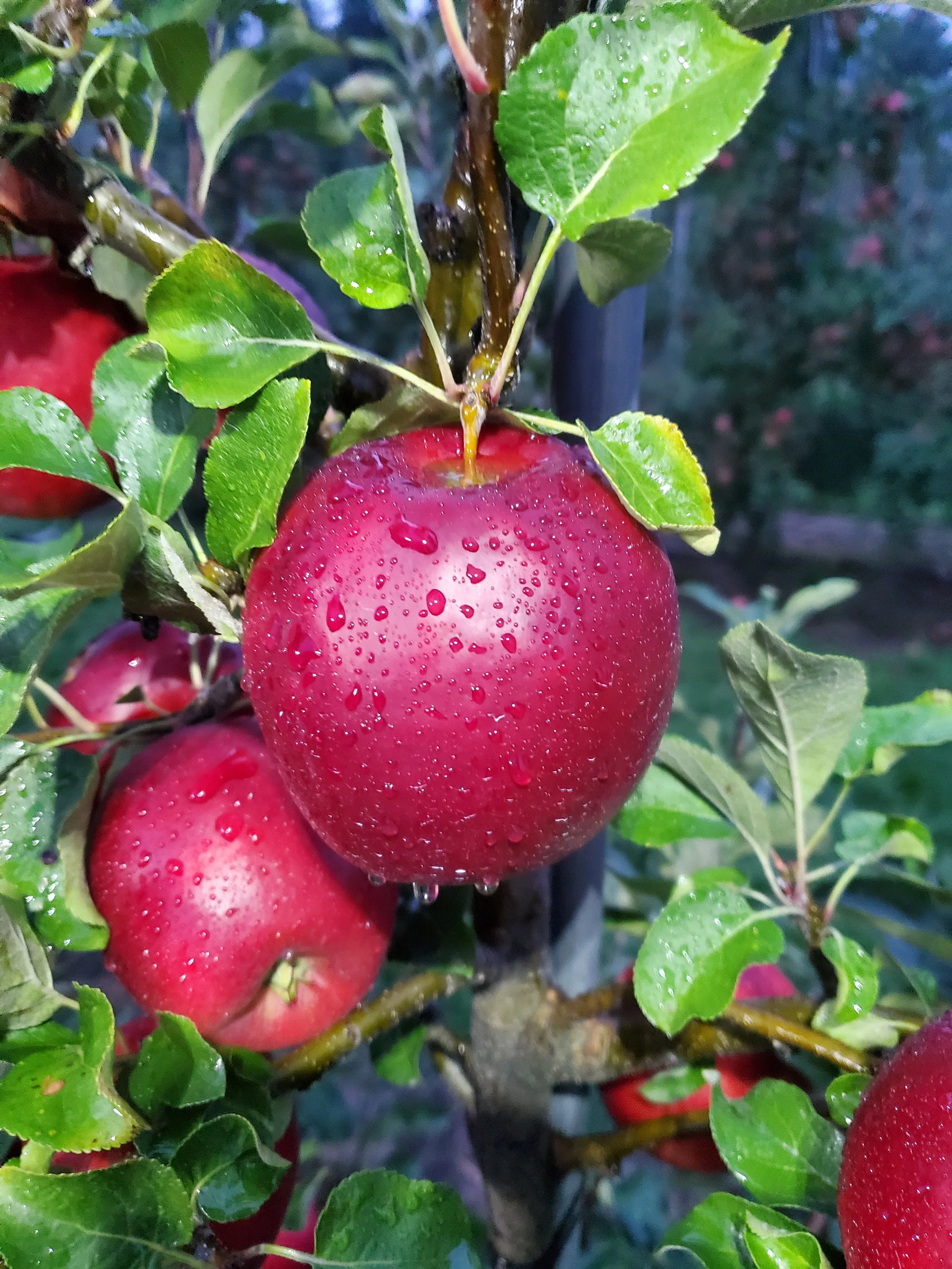
Discovered in 1971 at the Rutgers Fruit Research Center in Cream Ridge, New Jersey. It was released as a commercial variety in 2005. Its parentage is from two unnamed seedling apple varieties. As the name implies, its a firm, deep red, and crunchy apple. Crispy yellow flesh that has a sweet – tart flavor. Excellent storage life lasting several months in the refrigerator crisper drawer. Best for fresh eating, juice, and cider.
Empire
Empire was released in 1966 after two decades of careful evaluation at the New York Agricultural Experiment Station in Geneva NY. It is a cross between McIntosh and Red Delicious. An equally balanced blend of sweet and tart, Empire is juicy and very crisp. It has dark red skin with creamy white flesh. Best for fresh eating and for use in salads.

Esopus Spitzenburg (Antique)
The Spitzenburg was discovered in the late 1700’s by an early Dutch settler of the same name. It was found at the settlement of Esopus, on the Hudson River, in Ulster County, NY. Esopus Spitzenburg is known to be Thomas Jefferson’s favorite apple. He planted Spitzenburg trees at his Monticello estate and they are still growing there today. It has a dark red skin covered with small white freckles called lenticels giving it a dappled appearance. The firm flesh is tinged yellow and has an aromatic, complex flavor with tangy and spicy undertones that are the perfect balance between sweet and sharp. Used for fresh eating an baking.

Firecracker
A new variety from the Cornell AgriTech Apple Breeding Program, it was officially released in 2020. Firecracker has a red blush, yellow background color and partial russet skin. It has a unique combination of acidity and sweetness that produces complex flavors. Firm and crisp, its crunch is just right. Dubbed as a “triple threat” due to its versatility, it’s good for eating, baking and hard cider.

Fuji
The preferred variety for sweet apple lovers! Fuji is very sweet and crisp. Great for fresh eating and for applesauce, which requires little or no sugar. This variety stores well when refrigerated. It originated in Japan in the late 1930’s and was released in 1962. It was derived from two American varieties - Red Delicious and Ralls Janet. There are many strains of Fuji which differ in red skin color intensity and ripening date.

Gala
Gala apples are mildly sweet and crisp. We hang our Gala’s on the tree longer than most in order to maximize flavor and juiciness which gives them a punchy taste. Best eaten fresh out of hand or in salads. Discovered in New Zealand in 1934 by Orchardist, J.H. Kidd. It was derived from a cross between Golden Delicious and Kidd’s Orange Red apples. Gala has recently surpassed Red Delicious as the #1 apple variety in the United States.
Golden Delicious
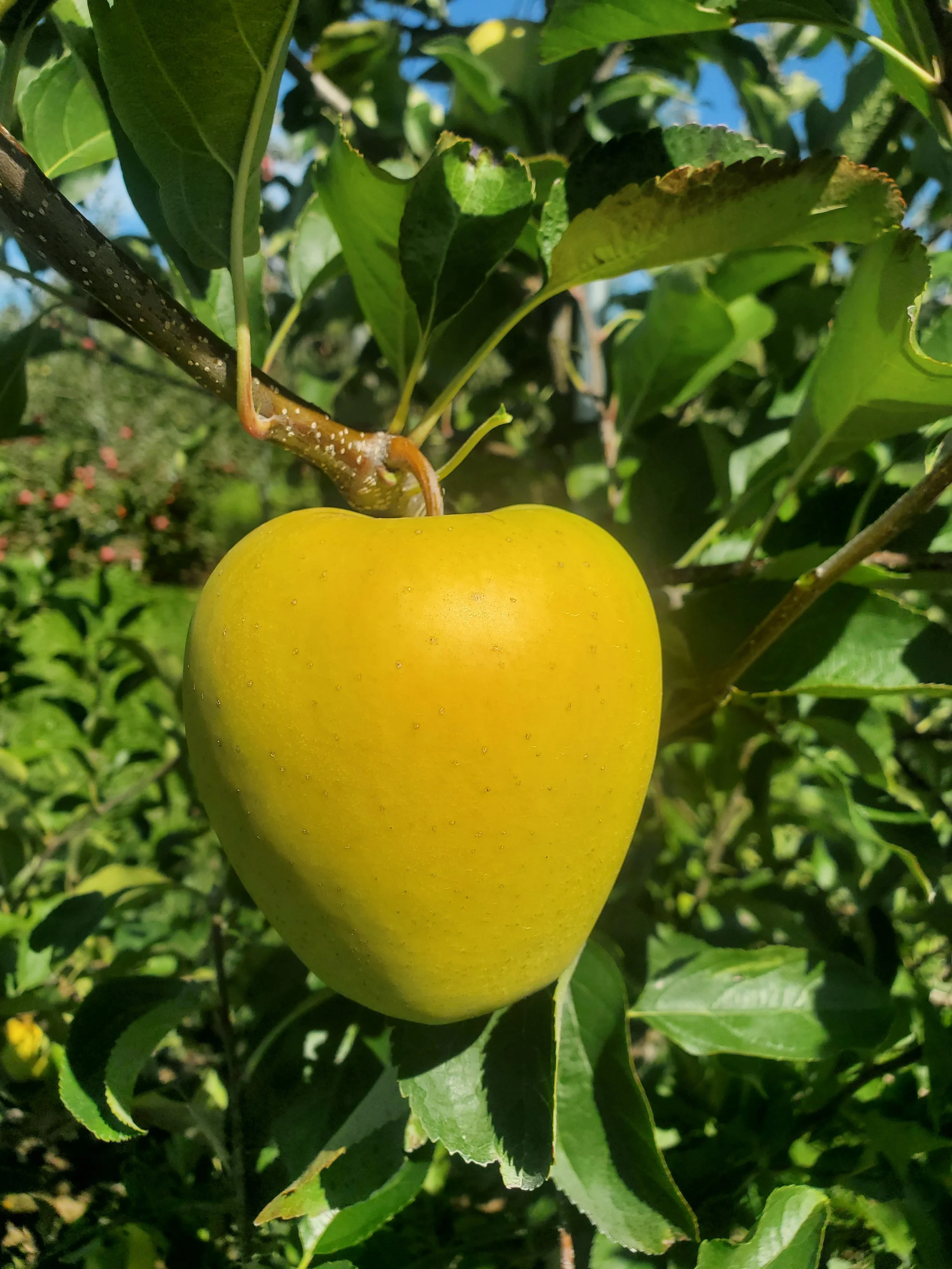
Exceptionally sweet and rich when left on the tree to ripen to a golden color. Flesh is crisp and tender. The apple’s flavor is more robust when grown in cooler climates like New England due to a higher acid to sugar ratio compared to apples grown in warmer climates such as Washington State. Fresh eating, salads, apple sauce and apple butter. It is highly rated as a baking apple for pies due to its balanced flavor and high pectin content which allows it to stay intact when cooked. A chance seedling, possibly a hybrid of Grimes Golden. Discovered in 1905 in West Virginia. It was locally known at Mullins Yellow Seedling after being discovered by J.M. Mullins. First introduced as a commercial variety in 1914 by Stark Brothers Nursery in MO. It quickly became a popular commercial variety.

Golden Russet (Antique)
•Golden russet is an early American apple, believed to have sprouted from a seed of an English russet in upstate NY in the 19th century. It was a popular commercial variety in the 1800’s. The yellow flesh is crisp, fine-textured, juicy, and highly flavorful, with a noticeable sweetness. The high sugar, acid and tannin content produce apples with strong flavor. These attributes make it a favorite for hard cider production. In addition to fresh eating, the apples can be used for cooking and drying.
Granny Smith
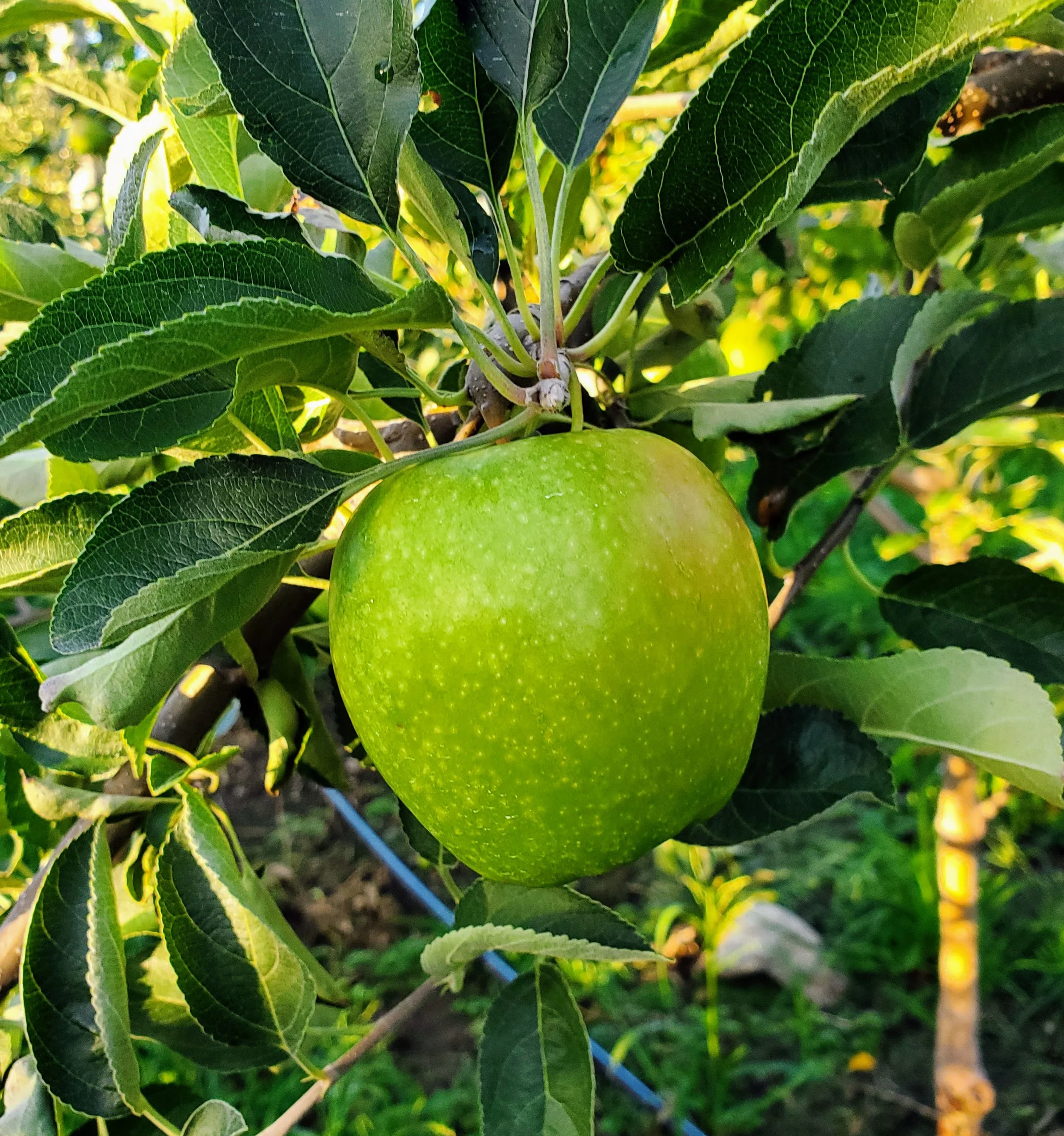
Discovered as a chance seedling in 1868 in New South Wales, Australia, by a grandmother named Maria Ann "Granny" Smith. It is believed to have grown from a discarded pile of French Crab apples cooked by her. Intensely tart, tangy, and refreshing with an extra-firm, hard, and crunchy texture. Known for its signature bright green skin, crisp white flesh, and clean, mouth-watering acidity that mellows slightly if left to hang late into the autumn freeze. A top choice for baking pies, crisps, and tarts because its exceptionally dense flesh holds its shape under high heat. Its high acidity cuts through rich sugars and fats, making it a legendary pairing with caramel or soft, sweet cheese. It is also excellent for fresh slicing in salads, as the flesh is naturally slow to turn brown after cutting.
Grimes Golden
An heirloom apple variety that is believed to be the parent of Golden Delicious. The flavor is sweet, spicy and aromatic with a clean dry finish. The texture is fine grained and crisp. An all-purpose apple that is excellent for fresh eating, sauces, pies and hard cider. Discovered by Thomas Grimes in Brooke County, West Virginia around 1804. It was widely grown in the Blue Ridge Mountains at the turn of the 20th century. The original tree is rumored to have been planted at a nursery established by Johnny Appleseed.

Honeycrisp
Complex, sweet-tart flavor, very crisp and juicy. In many instances, the juice from the apple will burst from your mouth on the first bite. In other words, it’s explosively crisp! Primarily a fresh eating apple due to its textural and flavor attributes. Also a good choice to blend with tart apple varieties for apple crisp or pie. A truly versatile apple that appeals to people of all ages. It is the favorite eating apple for many and is the most popular variety we grower at HGO. Developed at the Minnesota Agricultural Experiment Station in 1974, Honeycrisp was named and released for production in 1991.
Hudson Golden Gem
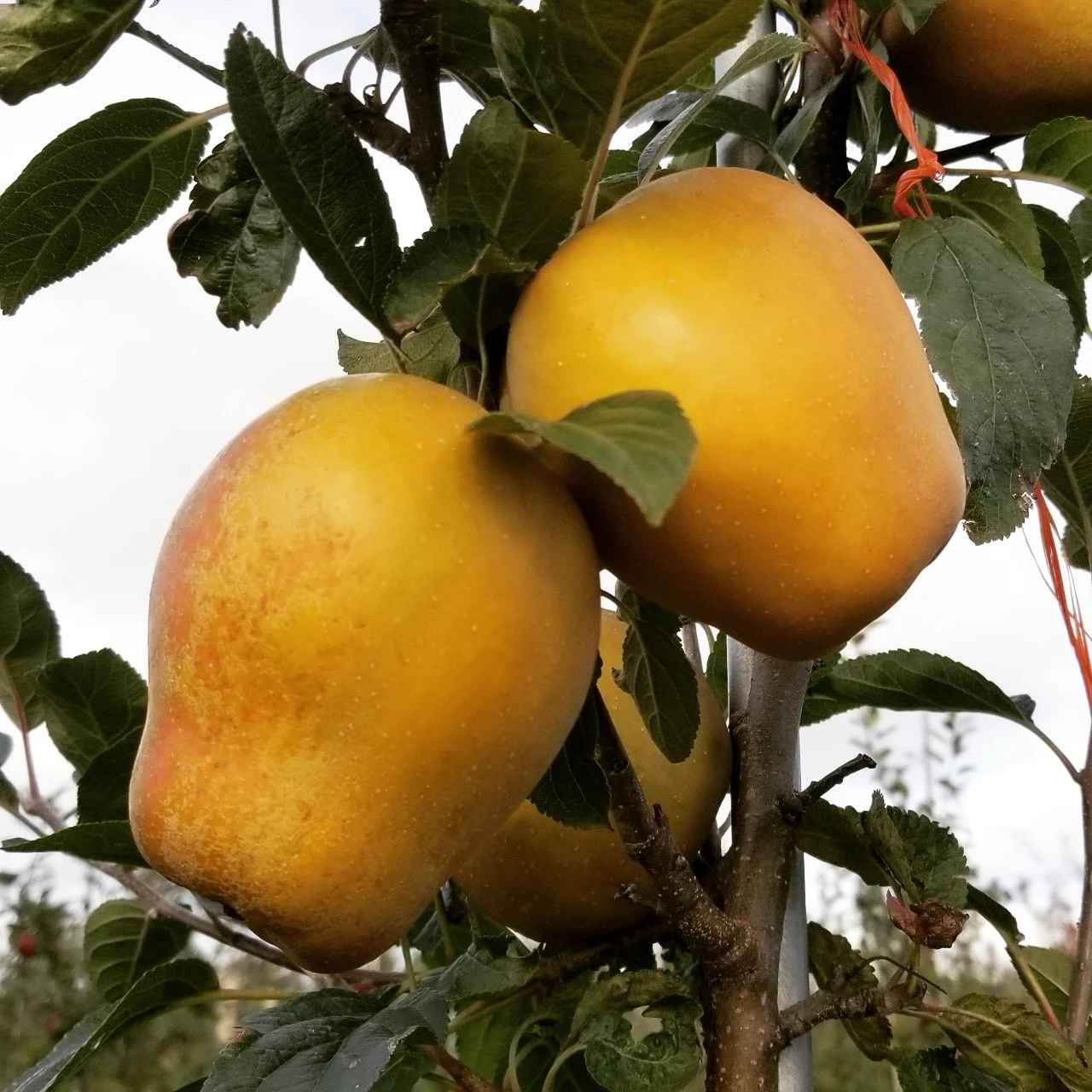
CHudson Golden Gem is an antique apple that was discovered as a fence row seedling at the Hudson Nursery in Tangent, Oregon in 1931. Because of its brownish/rusty color, textured skin and elongated shape, it was originally marketed as a pear. Turn it upside down and you’ll see why…Considered one of the best tasting russet apples, the flesh is very crisp and juicy. It has a nutty, sugary sweet flavor. Its conical shape gives it the appearance of a pear. A rare find, and widely unknown, Hudson Golden is truly a Gem! Best use is fresh eating. Chill it in the refrigerator for a refreshing afternoon treat that will boost your energy level with its high natural sugar content.

Jonagold
The cross of Jonathon and Golden Delicious was released in 1968 by the Cornell apple breeding program. Interestingly, it never became a major commercial variety in the United States but is extremely popular in Europe. Jonagold is an excellent multipurpose apple. Mostly sweet with some tartness, the texture of the creamy yellow flesh is noticeably crisp and juicy. Primarily a fresh eating apple, one of the best kept secrets about Jonagold is that it makes a splendid pie. The apple slices soften nicely while retaining their shape during cooking.
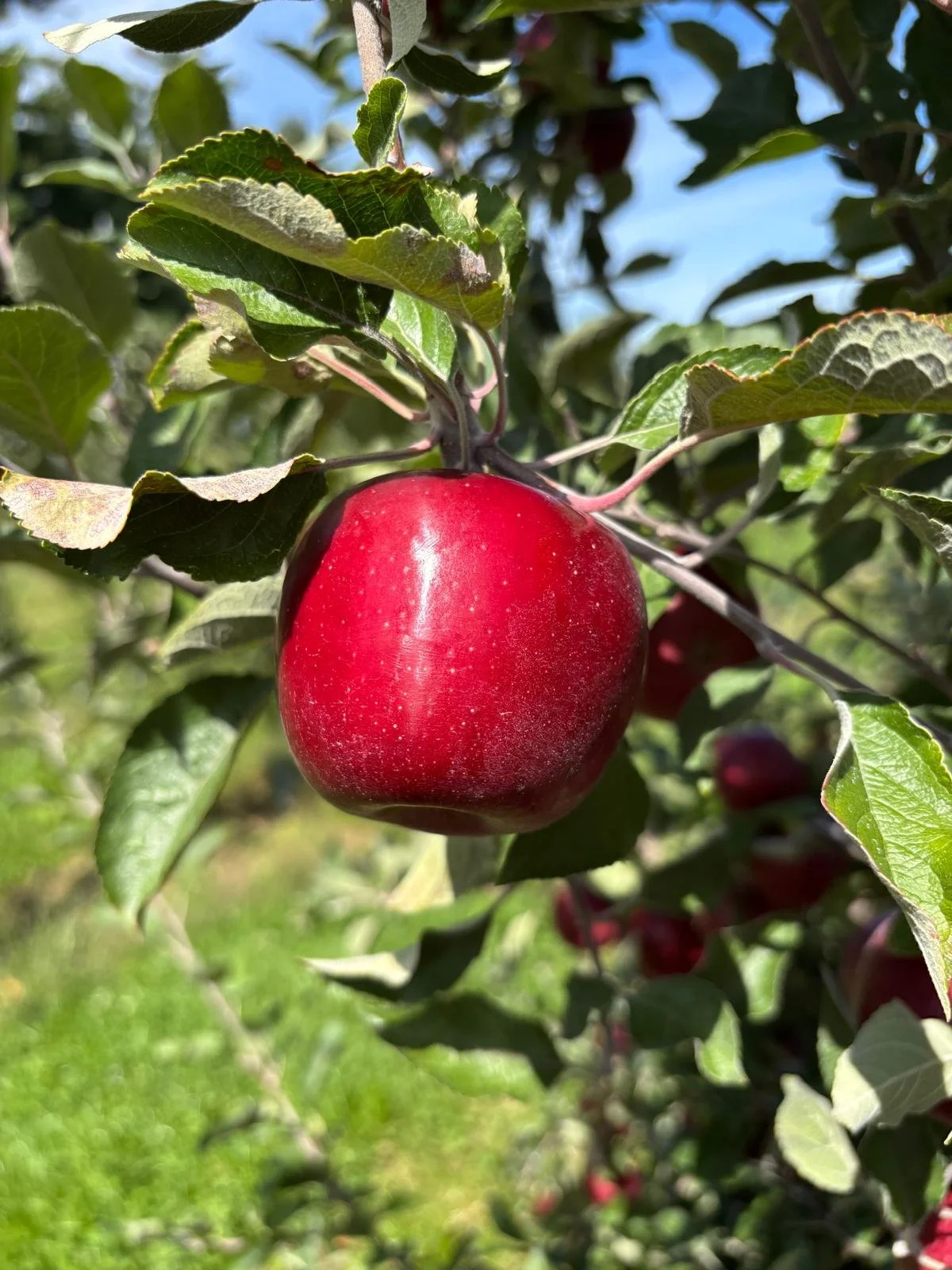
Jonathan
Highly juicy, sharp, and tangy with a fine-grained, crisp white flesh. It packs an aromatic, lively punch that sweetens slightly as it ripens on the tree, featuring a classic, deep red skin color. A legendary all-purpose heirloom kitchen apple. It is highly prized for baking pies, cooking into sauces, and blending into juices and fresh sweet cider. When making applesauce, cooking it with the deep red skins left on gives the sauce a beautiful, signature pink tint. Believed to have originated on a farm in Woodstock, New York in 1826. The seed itself came from a fruit off a historic Esopus Spitzenburg tree. It was subsequently named in honor of Jonathan Hasbrouck who discovered the new variety.

Macoun
Macoun is a distinctly New England apple only available for a few months in the fall. It is esteemed for its crispy, juicy white flesh and sweet-tart flavor. Often pronounced “Ma-coon”, the correct pronunciation is actually “Ma-cowan”. Best use is for fresh eating. A cross between 'McIntosh' and 'Jersey Black’, Macoun was developed in 1909 by Richard Wellington at Cornell University’s New York Agricultural Experiment Station. It was released commercially in 1923. It was named after famed Canadian pomologist W.T. Macoun.
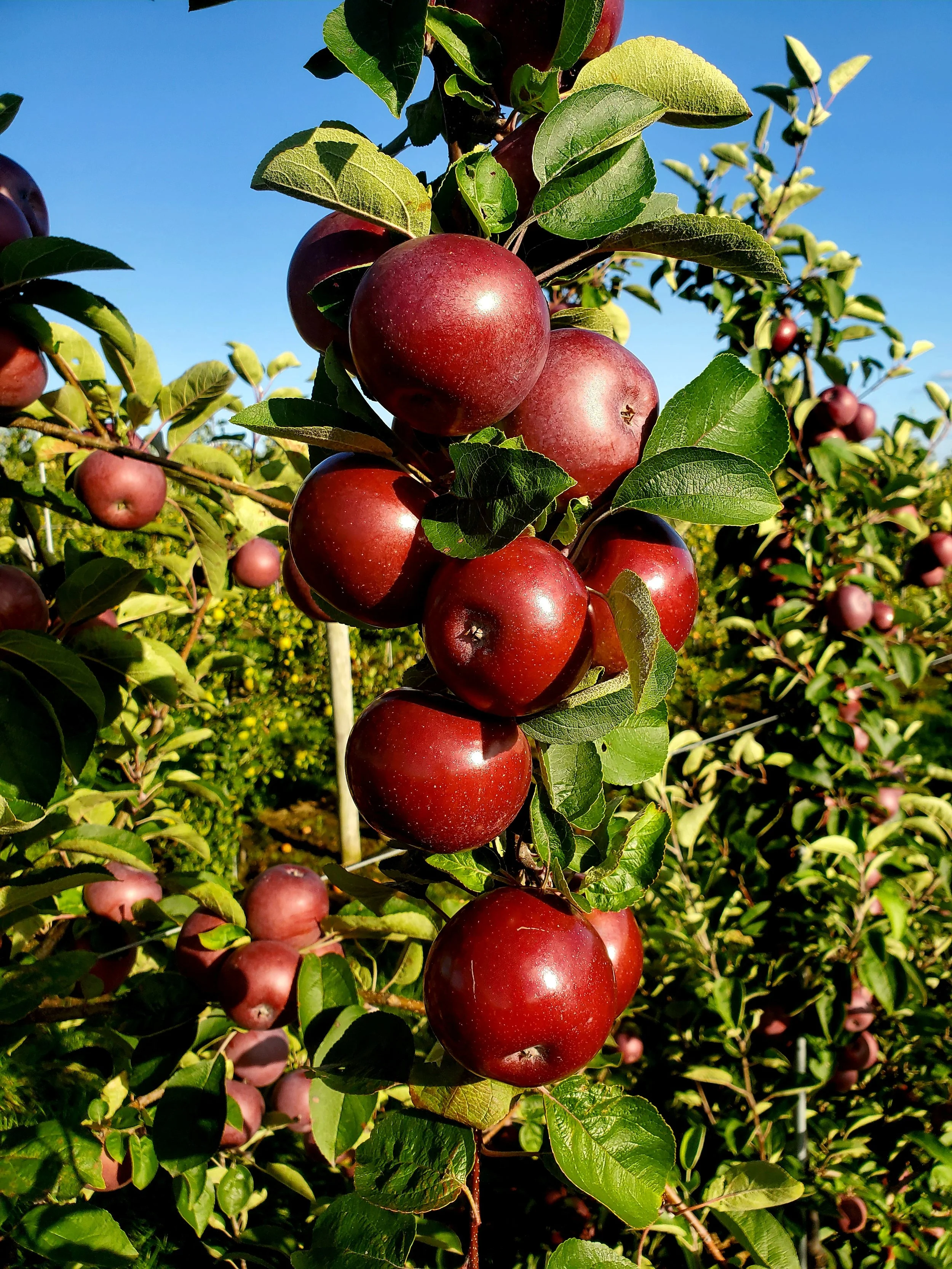
McIntosh
This quintessential New England variety actually originated in Canada. John McIntosh discovered the original McIntosh sapling on his Dundela farm in Upper Canada in 1811. It became common in the northeastern US after 1900. It is still a favorite for many consumers. Slightly tart and the most aromatic of all apples. Crisp (but not hard) white flesh with berry-like aroma. McIntosh is initially firm after picking but softens during storage. A flavorful eating apple. It breaks down easily when cooked making it a good choice for applesauce. If used for pies, we recommend mixing it with a hard fleshed variety for the best taste and texture. If used alone in baking, they will lose their shape and have a saucy type texture.

Mutsu (also known as Crispin)
Crisp, juicy and noted for its sweet-honey flavor with tangy undertones. Apples tend to be large in size. A true dual purpose apple; it can be used for either baking or fresh eating. It has a coarsely grained flesh that holds up well when cooked. Mutsu apples were developed at the Aomori Research Station. Located in Mutsu Province Japan, in the 1930s. The variety is a hybrid of Indo and Golden Delicious apples and was introduced to the USA in 1948. Mutsu apples were later renamed to Crispin apples in the USA in 1968 as part of a marketing campaign.
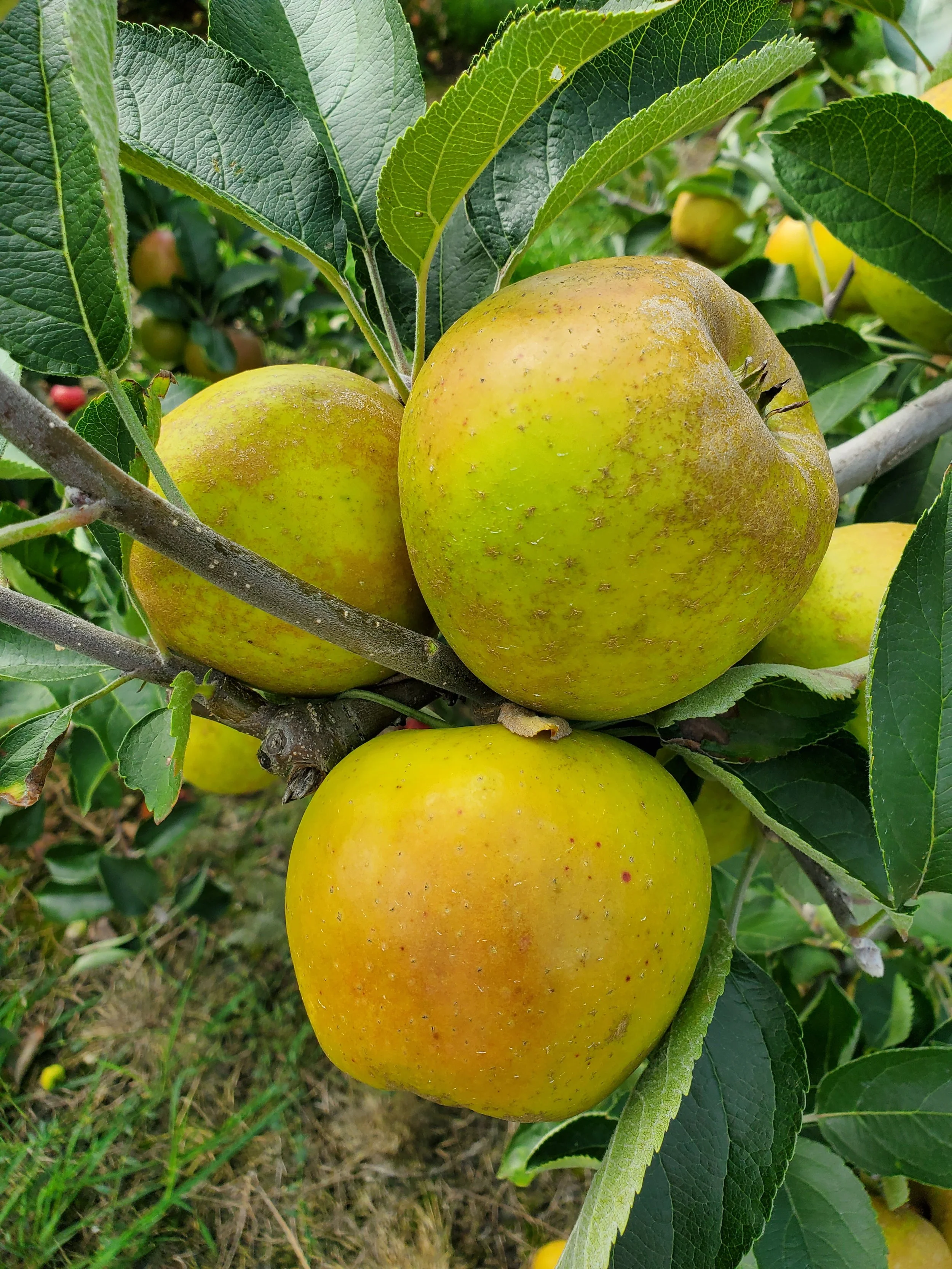
Newtown Pippin
One of America’s oldest native varieties, discovered in the late 1600s in Queens, NY. It was famously grown and celebrated by both George Washington and Thomas Jefferson. Intensely crisp and sharp at harvest, developing a rich, piney sweetness with distinct citrus and undertones after storage. Features a dense, yellow-green skin. A legendary heirloom powerhouse that excels as a premier baking apple because its firm flesh holds shape. Highly sought after for a premium craft hard ciders.

Northern Spy (Antique)
Originated in the early 1800’s in New York state. Difficult to find now due to its challenging growth habits and its biennial bearing nature (produces a crop every other year). The white flesh is juicy, crisp and mildy sweet with a rich, aromatic subacid flavor, noted for high vitamin C content. It’s characteristic flavor is more tart than most popular varieties, and it’s flesh is harder and crunchier than most, with a thin skin. As the old saying goes, “Spys are for pies”. It was considered the premier baking apple by many in the day since it softens during cooking but the apples still retain their shape. A must have for the pie connoisseur!
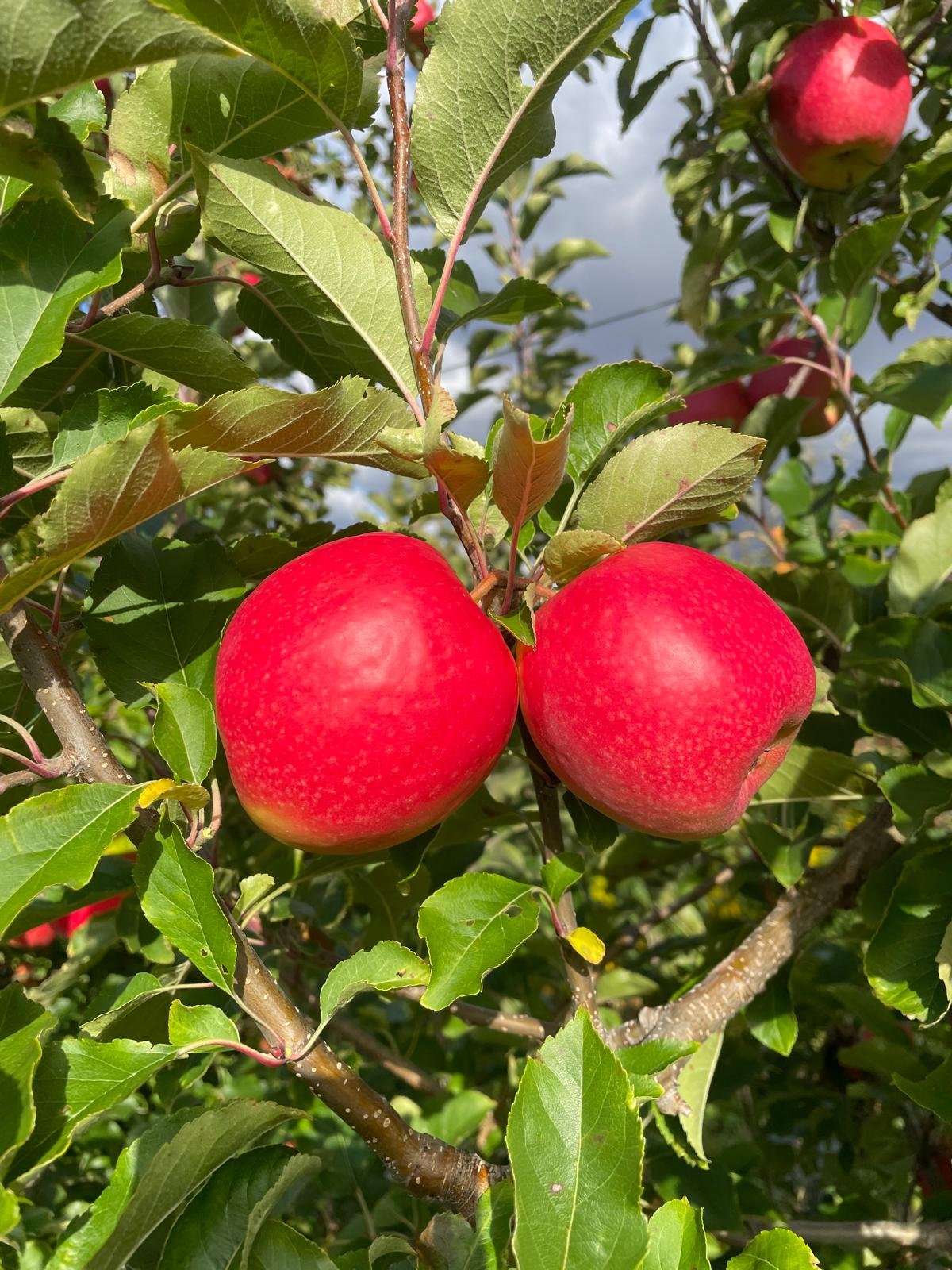
Pink Lady
Developed in the 1970’s by by John Cripps in Western Australia. It is a cross between Golden Delicious and Lady Williams apple. It has a unique, balanced flavor – the first bite is tart, followed by just the right amount of sweetness. The apple is firm with a pinkish/red skin color making it one of the most attractive apples we grow. Eat fresh out of your hand or use for baking. The firm flesh holds up well to high cooking temperatures.
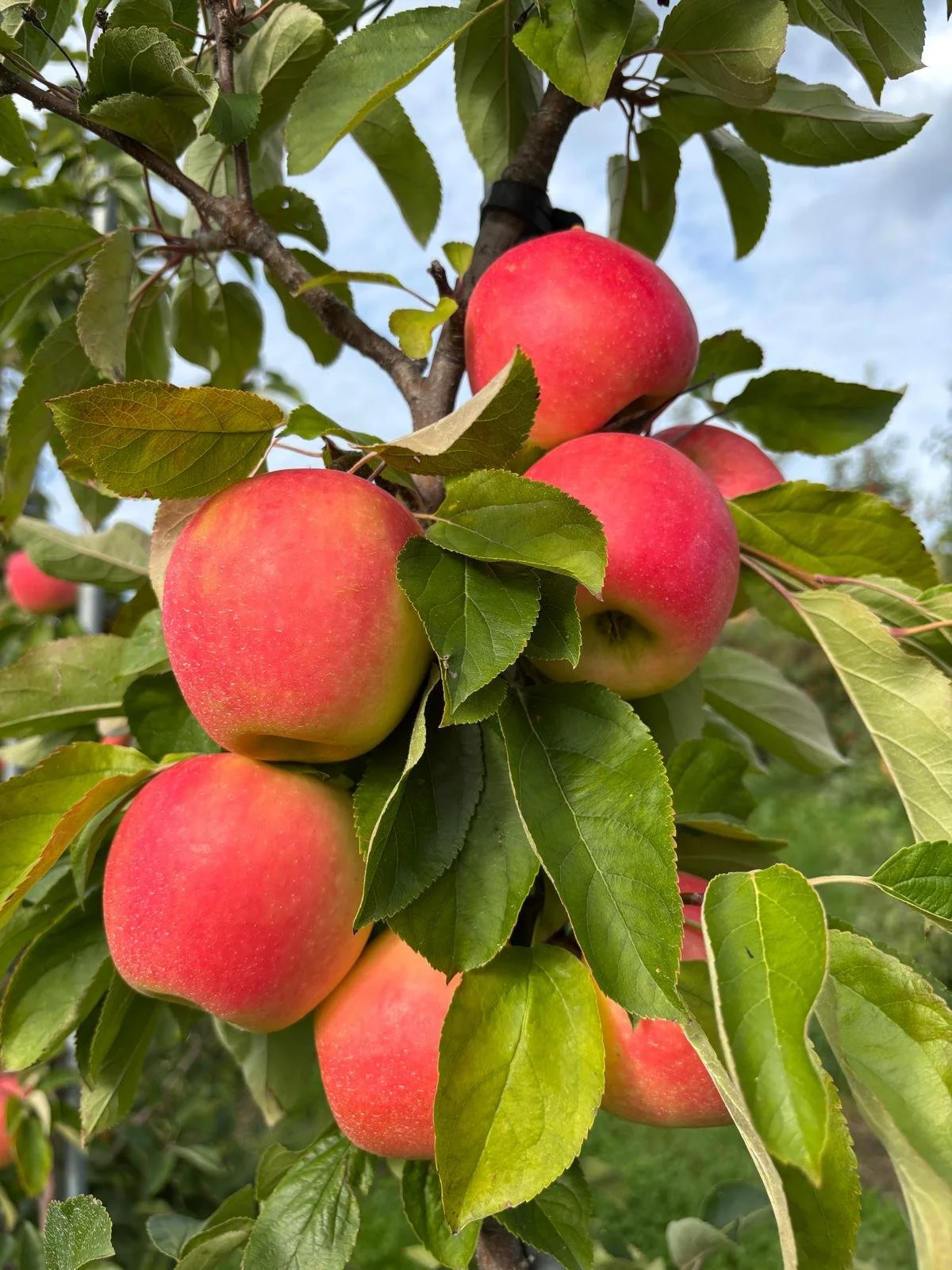
Pink Luster
Pink-fuschia blush gives this apple great eye appeal. It has smooth skin, coarse grained crunchy flesh, and a mild tart flavor. One of the best early season apples we grow. •Primary use is for fresh eating. •Pink Luster is a new variety from the Cornell AgriTech apple breeding program. It was officially released in 2020. It was derived from a cross of Honeycrisp and Gala.
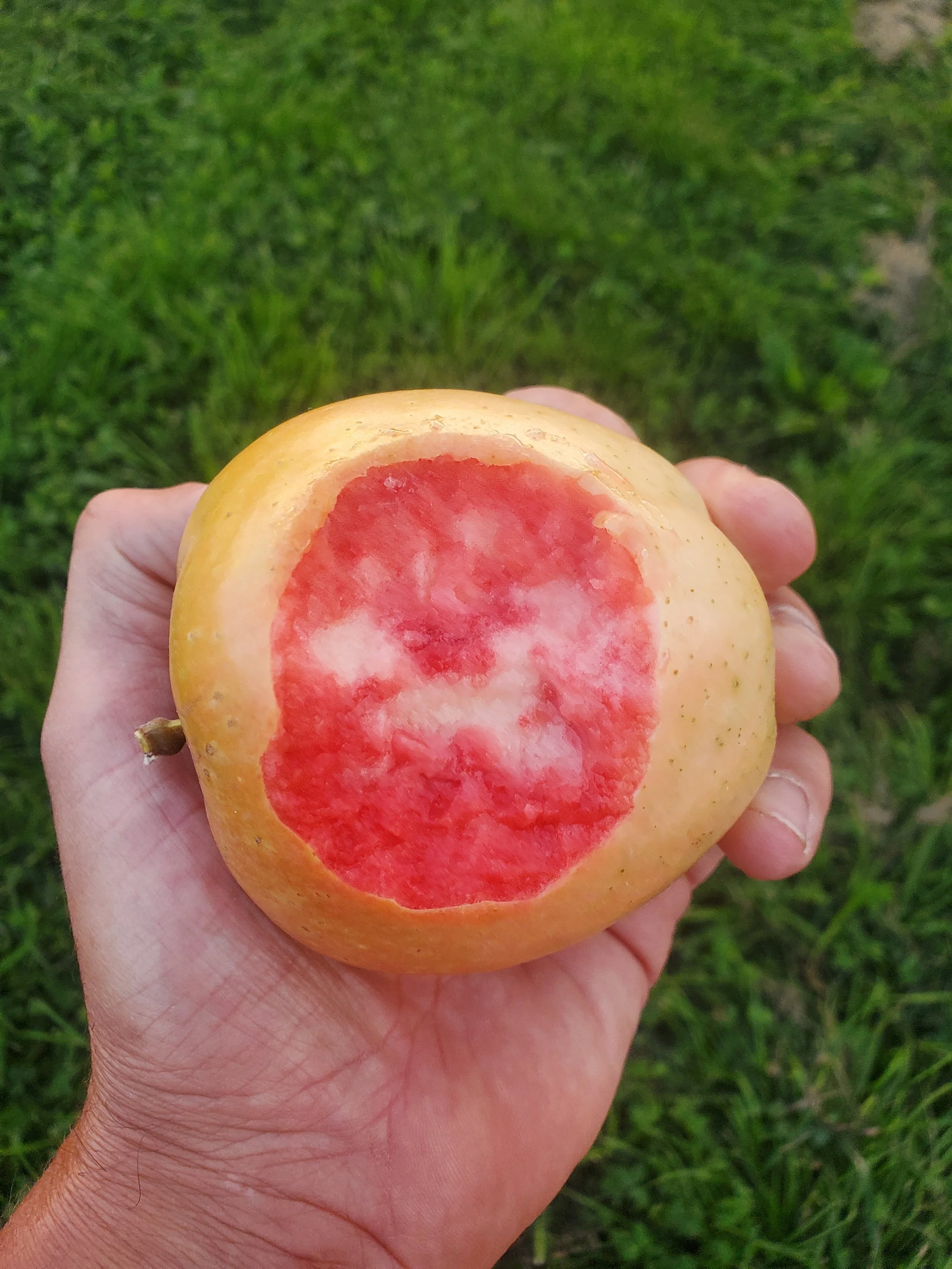
Pink Pearl
Pink Pearl is red/pink fleshed apple. Underneath the yellow-green skin you will find rosy pink mottling of the flesh. The intensity varies between individual apples. The apple is crisp, juicy and tart! Fresh eating for those who like tart apples. Good for baking, especially in open-topped deserts where their pink color makes for an eye-catching display. Developed in 1944 in northern California by renowned apple breeder, Albert Etter. He focused his efforts on developing red fleshed apple varieties.

Porters Perfection (Hard Cider Apple)
This apple may have the appearance of a sweet strawberry but don’t let it fool you. It’s a bitter-sharp English cider apple used exclusively for hard cider making. A dark red apple with creamy flesh. It yields a highly acidic, low astringency juice. Porters makes an exceptional single variety cider that is both bright and fruity. First grown in the orchard of Charles Porter in East Lambrook, England, Porters Perfection dates to before 1900. Porter’s is not offered through our farm stand or our retail partners. Customers interested in purchasing Porters or any other variety for hard cider making should inquire directly via the website contact form for pricing and availability.
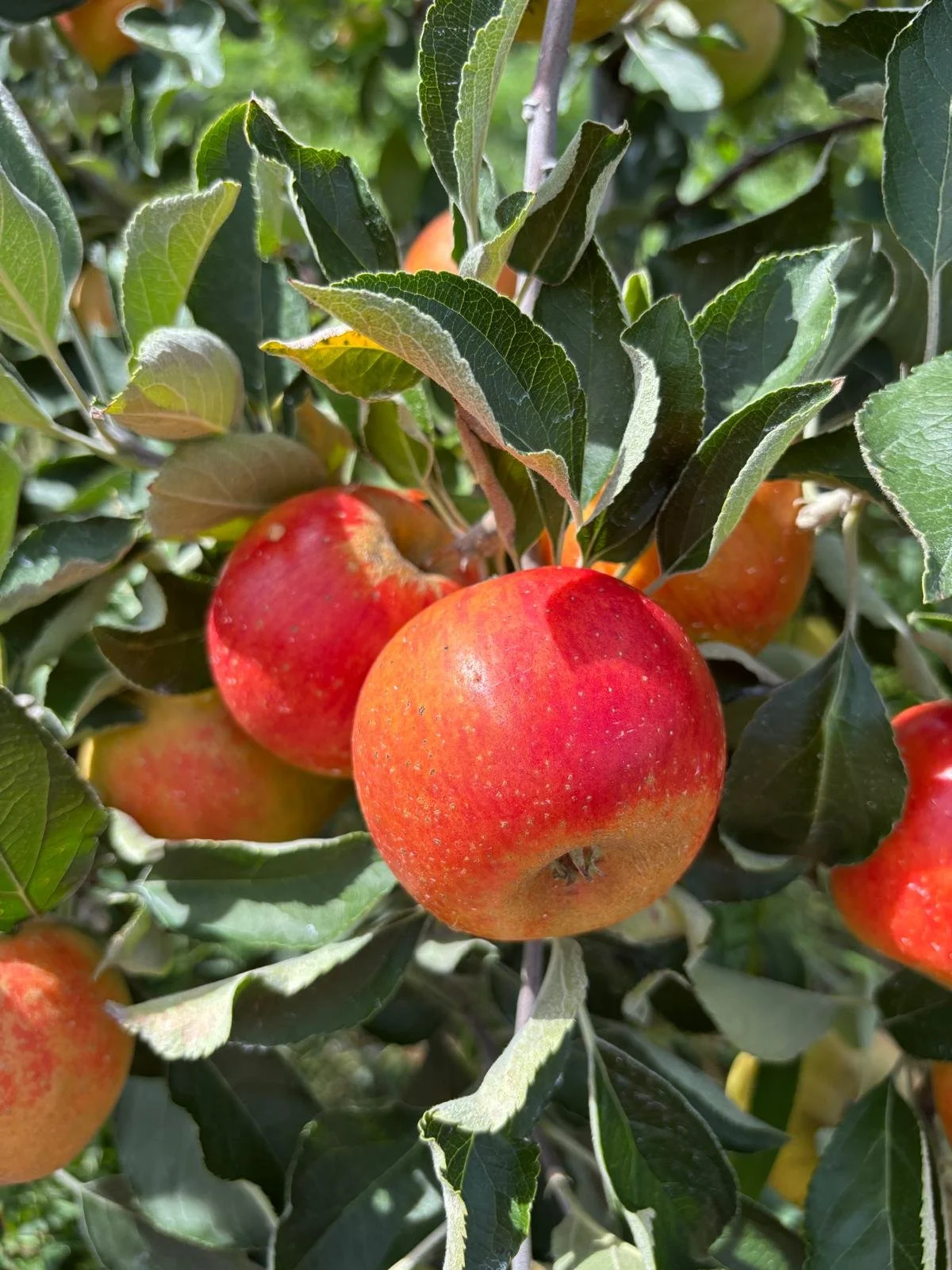
Ribston Pippin
A heritage English heirloom apple, first recorded in Yorkshire around 1707. It was a popular Victorian era apple, frequently mentioned in literature by such authors as Charles Dickens. It got its name from Ribston Hall, where it was first grown in the 18th century. It has rich, intense, and aromatic flavor with hints of pineapple. Firm, dense, cream-colored flesh. The flesh may have ‘honey core’ which appears as water-soaked spots when cut. This is a natural accumulation of liquid sugar (called sorbitol) which gives the fruit maximum sweetness. Good for fresh eating, cooking, baking and cider.

Rosalee
Rosalee is a new apple that was recently released in 2017 from the Midwest Apple Improvement Association. The parents of Rosalee are Honeycrisp and Fuji. A spectacular, breaking-crisp yet light texture paired with a clean, floral sweetness. Underneath its distinct rose-pink blush skin, the yellow flesh is incredibly coarse-grained and juicy, making every bite refreshing and aromatic. Superb for fresh eating straight out of hand to enjoy its premium texture.
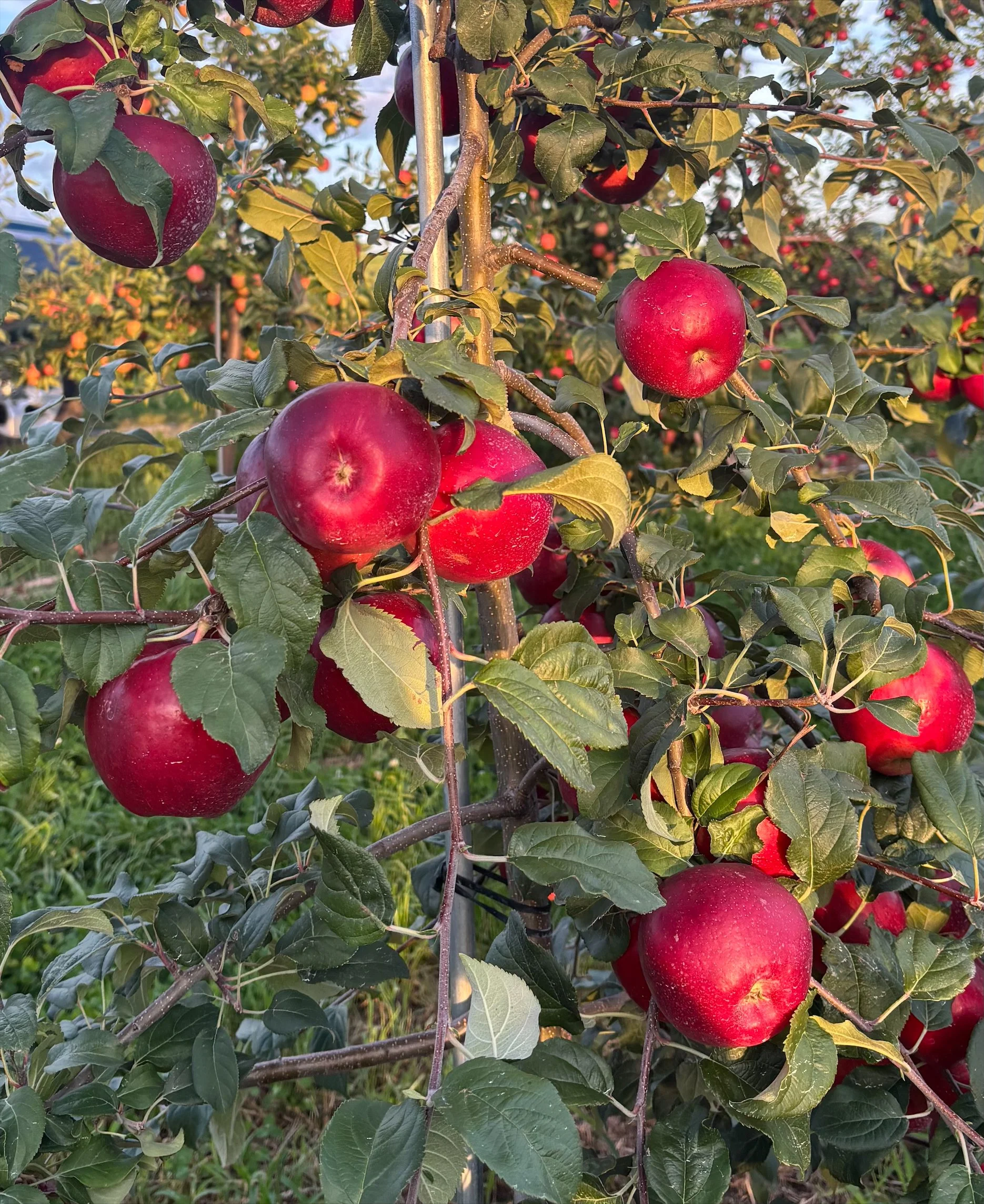
SWEET MAIA
Developed as a cross between Honeycrisp and Winecrisp by the Midwest Apple Improvement Association (MAIA). First fruiting in 2009, this breakthrough early-season variety was bred specifically to bring long- lasting crunch and high sugar levels to the August harvest window. Officially released in 2020. Candy-like sweetness with a firm, snap-crisp texture. It is a rare summer-ripening apple that delivers the robust flavor, juicy crunch, and excellent quality typically found only in late fall varieties. Features a beautiful red blush over a yellow background skin. Good for fresh eating and tossing in to crisp fall salads.
Triump
A cross between Honeycrisp and Liberty. It was released by the U of MN apple breeding program in 2021. It is naturally resistant to the fungal diseases apple scab and cedar apple rust. sweet, robust flavor balanced by a pleasant tartness. It has exceptionally juicy and crisp texture similar to its parent Honeycrisp. Triumph has more acidity than Honeycrisp which gives it a more complex flavor. All purpose apple but primarily for fresh eating.

Wickson
Dating back to 1944, Wickson Crab was developed by Albert Etter, an apple enthusiast best-known for his work on red-fleshed apples. Etter named his apple after his friend Edward J. Wickson, a leading Californian pomologist. A large crabapple, it is small, round, spicy, intensely sweet with a pronounced acid tang. Wickson is a renowned hard cider apple but has a loyal fan base for eating out of hand. It is great addition to savory dishes such as pork roast since it adds a sweet and tangy contrast.
Winesap (Antique)
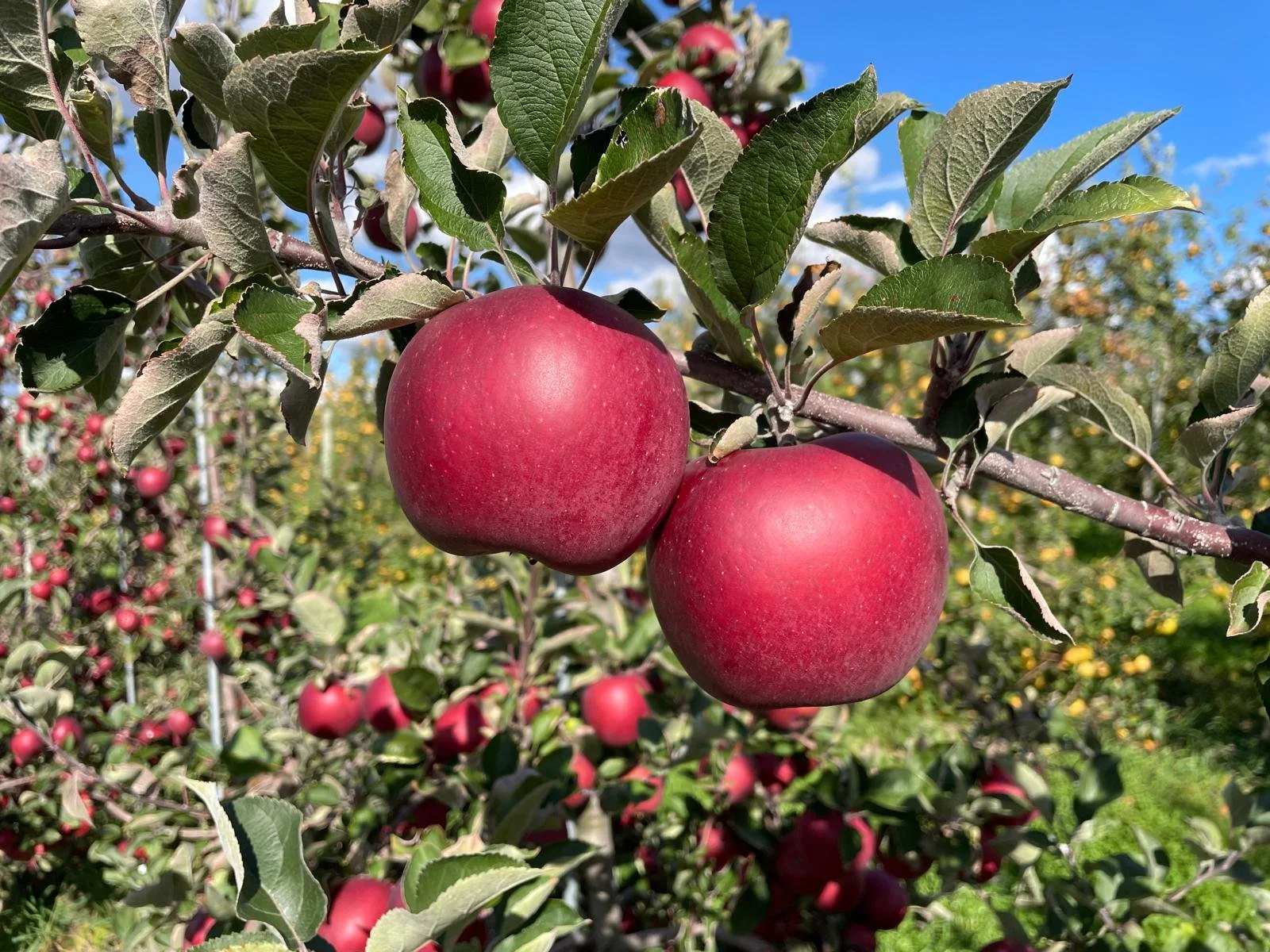
Winesap originated in New Jersey in the late 1700’s and has been popular since the days of the pioneers. One of the latest to ripen, Winesaps are available in mid to late October. Medium size with dark red skin and red stripes. It is juicy, crisp and aromatic. Wine lovers may enjoy this apple since it has a flavor that blends sweet and sour giving it a wine-like taste, hence the name. Good for fresh eating, applesauce, pies and cider. Winesap keeps well in the refrigerator.

Seedless Table Grapes: We grow our own grapes!

Marquis
Released in 1996 by Cornell University. White seedless grape with excellent mild American flavor. The berries are large with a juicy, melting texture. Flavor is mild and fruity when first ripe, to a stronger labrusca (Concord) flavor two weeks later. Good for fresh eating, jam, jelly, and juice.

Vanessa
A red dessert grape of excellent quality. Berries are medium size. The flavor is mild and fruity, and berry texture is firm to crisp. The fruit is among the best of the red seedless types. Developed by the Horticultural Research Institute of Ontario, Canada.